
Research Highlights
Highlights of SFARI-funded papers, selected by the SFARI science team.

Subscribe to our newsletter and receive SFARI funding announcements and news

Protein Levels, Not Just Transcripts, Hold Clues to Autism

Altered Corticotectal Circuitry Shapes Contextual Sensory Processing in a Mouse Model of Autism

Using the Linear References from the Pangenome to Discover Missing Autism Variants

Age at Autism Diagnosis Linked to Distinct Genetic Profiles
Recent SFARI-funded research challenges the idea that autism represents a single condition driven by a uniform set of genetic risk factors. Instead, the results support a developmental framework in which distinct constellations of polygenic influences are linked to different diagnostic timelines.

Choroid Plexus Secretion Regulates CSF Proteome and Alters Brain Development
SFARI-funded research demonstrates that activating serotonergic 5HT2c receptors leads to an increase in intracellular calcium, early-response gene expression and elevated protein secretion into cerebrospinal fluid.

Multimodal Approach Reveals How Autism-Linked Genes Shape Primate Prefrontal Cortex Development
SFARI-funded research finds that RAPGEF4 is a key molecular regulator orchestrating prefrontal cortical maturation in primates.
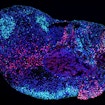
Human Assembloid Model Reveals Region-Specific Effects of an Epilepsy-Linked Mutation
SFARI-funded research demonstrates that SCN8A mutations underlying DEE-13 disrupt both cortical and hippocampal networks, but in distinct ways.

Performance on a Specialized Video Game Distinguishes Children with Autism From Those with ADHD and Neurotypical Development
- Previous Page
- Viewing
- Next Page