Spectrum: Autism Research News
Genetics first:
A fresh take on autism's diversity
Each child with autism is different from the next. One approach rapidly gaining momentum makes sense of this diversity by grouping children together based on their genetics, then looking for patterns in their symptoms.
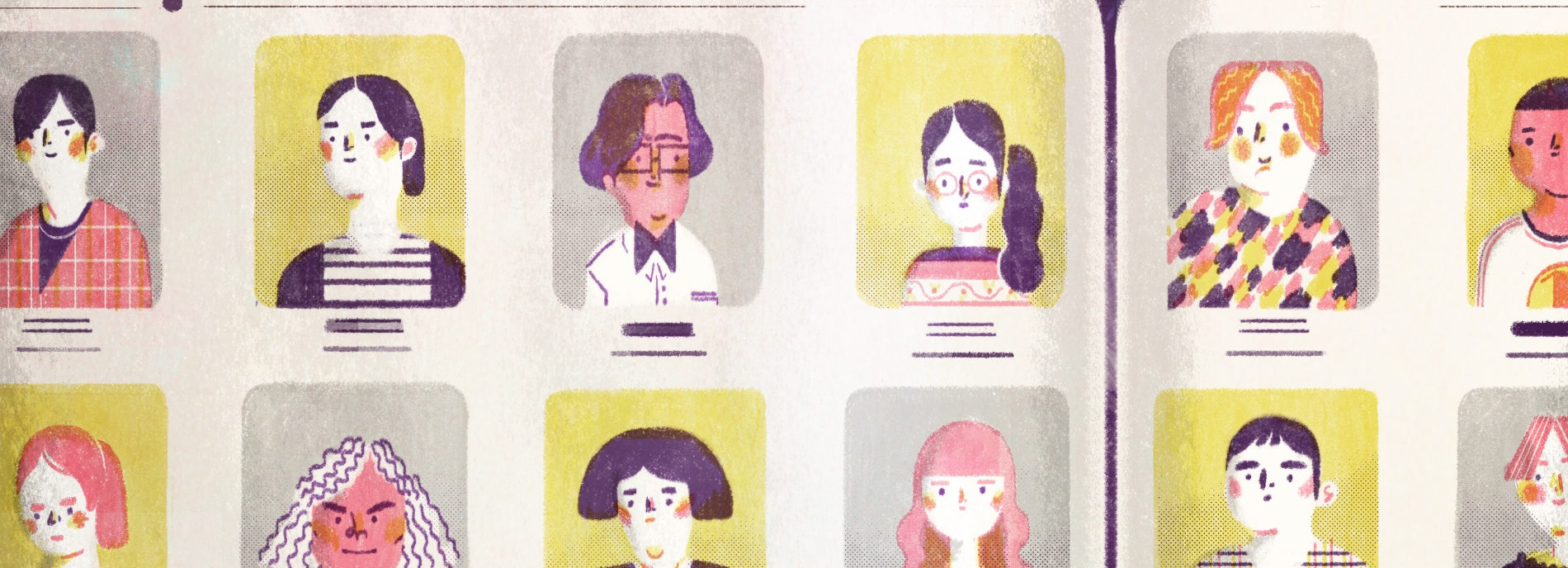
Geoffrey Ondrich and Waylon Cude are both 16 years old. Both boys have autism, and both would rather use their computers than do almost anything else in the world.
But that’s just about all they have in common.
Waylon is serious and intense, and so is the way he uses his computer: He spends hours immersed in online role-playing games, and he interned last summer at IBM, programming Linux for websites.

Geoffrey Ondrich, 16.Courtesy of the Ondrich family
On a sunny Friday in October, he leans toward a computer monitor in a testing room at the University of Washington in Seattle, where he is part of a study on the genetics of autism. Waylon focuses diligently on his reaction-time test, frowning to himself when he makes a mistake. Throughout the day, he responds politely to questions, especially factual ones, but doesn’t engage in chitchat or commentary. At one point, a clinician who has been testing Waylon’s motor skills remarks that he is almost as nimble at rearranging tiny plastic pegs with his left hand as he is with his dominant right. Waylon doesn’t respond.
By contrast, when Geoffrey completes a task for the same study, he gets a few minutes on his iPad, his passport to fun and pleasure. He watches bits of a movie or scrolls through his collection of music until he finds a particular song with a catchy, disco-y beat, and dances happily in his chair.
When he doesn’t have music to dance to, Geoffrey often rocks back and forth in his chair, slapping the top of his left wrist with his right hand. The clinician who is working with him struggles to engage his attention as Geoffrey picks up a plate from a toy tea set and peers at it closely. He bites the plate, then rolls a Matchbox car back and forth over the table in front of him.
It’s no surprise that these two boys, at the same age and with the same diagnosis, are so different. Clinicians are fond of saying, “If you’ve seen one kid with autism, you’ve seen one kid with autism,” meaning that it’s impossible to draw conclusions by looking at just a few people.
This diversity has been a major hurdle for understanding autism and for coming up with treatments that can help a majority of people with the diagnosis. Most studies include individuals who share the same phenotype, or outward characteristics, but whose autism may arise from entirely different origins. Because of this, they often produce muddled results. “We recognize autism is a really heterogeneous disorder and we’re not making a lot of headway when we try to study it as a heterogeneous disorder,” says Thomas Frazier, director of the Cleveland Clinic Children’s Center for Autism.
A close look at DNA may provide a way through this muddle.
“What we’ve learned in the last five years about the underlying genetics is that there are hundreds, if not a thousand or more, different genetic subtypes of autism,” says geneticist David Ledbetter, chief scientific officer at Geisinger Health System in Danville, Pennsylvania.
Rather than recruiting people with autism based on outward characteristics, some researchers are turning this flood of genetic information into an advantage: They are classifying children with autism based on their genetics, and thoroughly characterizing each subgroup to map autism’s landscape as a whole. These ‘genetics-first’ studies, including the one in which Waylon and Geoffrey participate, may help researchers to construct a meaningful taxonomy of autism and understand the source of its diversity. Eventually, such studies may even lead to treatments that address the root cause of a child’s autism, rather than just the symptoms.
Mutation mix:
Researchers have known for a couple of decades, from genetic disorders closely related to autism such as Rett syndrome and fragile X syndrome, that people with a disruption in the same gene often have similar symptoms. In the past ten years or so, advances in technologies for sequencing and analyzing DNA have provided hints that the same is often true for people with so-called idiopathic autism, or autism of unknown cause.

Waylon Cude, 16.Courtesy of the Cude family
Beginning in the mid-2000s, microarray technology revealed that people with autism tend to carry many copy number variations, deletions or duplications of large stretches of DNA that encompass multiple genes. Researchers soon saw that people who harbor the same copy number variants often share other characteristics and symptoms as well.
To investigate these commonalities, some teams began to look into subgroups of people with a common chromosomal alteration. The most comprehensive of these projects so far is the Simons Variation in Individuals Project (Simons VIP), which is characterizing about 200 people with variations of a chromosomal region called 16p11.2. (The Simons VIP is funded by the Simons Foundation, SFARI.org’s parent organization.) About 20 percent of individuals with deletions in this region and 10 percent with duplications have autism.
In the past couple of years, it has become feasible to look more closely at the DNA of people with autism by analyzing all of the protein-coding sequences in their genomes — about 1 percent of the roughly 3 billion base pairs that make up each genome. This approach has revealed that many people with autism have mutations that aren’t found in people without the disorder, but few people with autism share the same mutation. Despite analyzing genetic material from more than 2,500 people with autism, “We almost never saw the same gene hit twice,” says Evan Eichler, professor of genome sciences at the University of Washington and a leader of one of the first of these studies1, 2.
At this point, dividing autism into subgroups based on changes in individual genes looked like a monumental task. In order to confidently link a gene to autism and describe the symptoms related to it, the team needed to identify recurrent mutations — those that crop up repeatedly, not just once or twice.
The solution was to create a much bigger study. Since 2011, Eichler has forged collaborations with geneticists in Belgium, the Netherlands, Sweden, Australia and China who manage registries of individuals who have autism or developmental delay3. This gave the researchers access to genetic material from more than 6,000 adults and children with autism (including Waylon and Geoffrey), 6,000 people with a general diagnosis of developmental delay, and thousands of controls.
Despite analyzing genetic material from more than 2,500 people with autism, “We almost never saw the same gene hit twice,” says Evan Eichler
Phenotypical buddies:
From this pool of potential participants, the researchers identify people with a mutation in any of about 200 genes linked to autism. They invite these individuals to the University of Washington or one of the collaborating centers abroad. There, the participants undergo several days of intensive testing, including gold-standard autism diagnostic tests, an in-depth medical history and medical exam, measurement and analysis of their head and facial features, and tests of language, motor skills, cognition and everyday living skills. With these results, the researchers are putting together precise profiles for each genetic subtype of autism.
In the case of one gene, CHD8, the profile quickly became apparent.
Raphael Bernier, a leader of the clinical side of the study at the University of Washington, knew things were on the right track when he saw two children with the same mutation in the span of about a week. He was struck by their similarities, such as wide-set eyes, a large head, or macrocephaly, and difficulty falling asleep. They were so alike that they could have been siblings, he says. “We started to say, there’s a pattern here; there’s a trend here,” Bernier recalls.

Geoffrey Ondrich with his cousin.Courtesy of the Ondrich family
The team soon found 13 more individuals like them scattered across the world, most of them diagnosed with autism4. It is not yet clear how mutations in CHD8 cause the symptoms, but CHD8 is known to be involved in coiling and stacking DNA into tightly-wound chromosomes, and to regulate many other genes that play a role in this process.
It is also still unclear what the CHD8 pattern means in terms of treatment. But having a molecular diagnosis — that is, knowing what gene is responsible for the disorder — helps many parents gain peace of mind, says Bert de Vries, a clinical geneticist at Radboud University in Nijmegen, the Netherlands, and a collaborator on the study. It may help them stop blaming themselves, or wondering if they did something to cause their child’s condition.
The researchers are beginning to connect families who have children with mutations in the same gene so that they can learn from one another’s experiences. “It is quite a relief for parents to see other children with a similar disorder so they are not on their own,” de Vries says. Bernier’s team set up a Facebook group for families affected by CHD8 mutations in September.
Geoffrey’s family found out earlier this year that he also has a mutation in CHD8. (Waylon’s mutation is in a gene called SETD2 — the research team is still trying to figure out what’s distinctive about people with mutations in this gene.) Geoffrey was not part of the initial group of 15 children identified, but he has a lot in common with those children.
“It’s pretty neat to think that there are other kids out there like Geoff,” says his mother, Sarah Ondrich, a veterinarian in Calgary, Canada. “They have the same kind of head shape, the same kind of macrocephaly,” she says. “It’s like they’re his phenotypical buddies, right?”
Families with children younger than Geoffrey may be able to get a glimpse of their future from looking at his trajectory. They may be reassured to know, for example, that even though he didn’t speak at all when he was diagnosed with autism at age 4, he now sometimes speaks in full sentences, talks about memories of family events and has recently declared that he has a crush on his gym teacher.
Families can also exchange information about treatment strategies that worked — or didn’t — for their children. The Ondrichs say that sticking to a diet free of gluten and casein, a protein found in milk, eases Geoffrey’s gut problems, though Sarah Ondrich recalls being skeptical at first that dietary changes would make a difference. Sharing such stories could enable other parents to gauge whether the hard work of adhering to a restricted diet is likely to pay off for their child. “The collective experiences of parents will help,” she says.
Personalized treatment:

Waylon Cude hiking with his family.Courtesy of the Cude family
The real promise of genetics-first studies, though, is not to define just one subtype of autism, but rather to find patterns of similarities among the many subtypes.
“We need to see what the cumulative findings are as we get more and more of these studies,” says Catherine Lord, director of the Center for Autism and the Developing Brain at New York-Presbyterian Hospital. Lord is not involved in these studies, but has wrestled with the question of how to subgroup children with autism and individualize treatment. The patterns may help define common biochemical pathways that give rise to particular symptoms, and point the way toward personalized treatments.
By focusing on a network of about 50 genes influenced by CHD8, the team at the University of Washington is already beginning to piece together some patterns. For example, they have found that, like children with CHD8 mutations, those with mutations in a gene called ADNP tend to have digestive problems — but are more likely to have intellectual disability5, 6.
People with mutations in DYRK1A, another gene regulated by CHD8, also have intellectual disability, but not gut problems. They also have unusually small heads — the opposite of the macrocephaly seen in children with CHD8 mutations. The researchers suspect that DYRK1A and CHD8 play opposing roles in brain development, so that a mutation in one results in a small head and a brain with too few neurons, and a mutation in the other leads to too many neurons and an enlarged cranium.
This situation, if true, has implications for personalized therapy, because a treatment that benefits people with too few neurons may cause problems for those with too many. “I’m completely convinced that you cannot treat all autisms the same way,” says Eichler.
“I’m completely convinced that you cannot treat all autisms the same way,” says Eichler.
The project Eichler co-leads is the largest, most coordinated attempt of the genetics-first approach, but other groups are also zeroing in on mutations in a particular gene and characterizing the effects. For example, Eric Morrow’s team at Brown University in Providence, Rhode Island, focuses on NHE6, a gene involved in neuronal development7. Mutations in NHE6 cause a form of developmental delay called Christianson syndrome. Children with this syndrome typically have severe intellectual disability and are unable to speak, and many are also diagnosed with autism8.
Morrow and his team are studying the disorder “from soup to nuts,” he says. They developed a mouse model of Christianson syndrome, produced stem cells from patient tissues and helped launch an association for families. His hope is that studying genes such as NHE6 that are linked to intellectual disability and severe autism will help lead to new interventions for people on that end of the autism spectrum, who haven’t benefited much from current treatments. “We need to come up with a new strategy for them,” he says.
Messy stories:
Meanwhile, at the Cleveland Clinic, Frazier and his colleagues have focused on mutations in another gene, PTEN. Compared with others who have autism, people with PTEN mutations tend to process information slowly and have deficits in working memory, or the ability to hold multiple pieces of information in mind over short periods of time, the researchers reported in October9.
Those results suggest that teachers and behavioral therapists will need to adapt their methods when working with children who have PTEN-linked autism, says Frazier. They should speak slowly, for example, keep directives short and simple, and not ask the children to remember too many pieces of information at a time.

Evan Eichler, professor of genome sciences at the University of Washington.C. McLean/Univ. of Washington
People with PTEN mutations are known to have large heads, and Frazier’s team found that they have abnormally large quantities of white matter, the nerve fibers that connect brain regions. The white matter is poorly organized, which might relate to the difficulties with working memory. In contrast to the inconclusive results from brain imaging studies of people with autism stemming from a wide range of causes, the results here are striking, says Frazier. “When you look at PTEN, it’s like, ‘Bam!’ It’s huge.”
Lord agrees that puzzling out the different genetic subtypes of autism is important — but she cautions that researchers may inadvertently identify patterns in a group that don’t set it apart from other groups, or may downplay the differences within a group.
“I think there’s huge pressure on the authors to find something,” she says. For example, gut problems and sleep problems are common among children with autism, not just those who carry mutations in CHD8. “Ultimately what we want to know is: Could we identify these kids if we didn’t know their genetic abnormality?”
Besides, not all stories that come out of genetics-first studies of autism are going to be tidy and straightforward. Some autism genes may result in a range of phenotypes that might include neurodevelopmental disorders other than autism. Still other genes may not be associated with any predictable phenotype at all.
For some families involved in these studies, the story won’t have a neat outline. Waylon volunteered for the study (and even got a skin biopsy, despite his terror of needles) with altruistic motives — “so I can help other people with autism, and just further research about it.” But for him and his family, there are still more questions than answers.
So far, knowing that Waylon has a mutation in SETD2 is “just letters and numbers,” says Waylon’s father, Curtis Cude, an environmental chemist in Portland, Oregon. “I want to know: What does that mean? What are the shared characteristics? What does that gene actually affect?”
Luckily, Waylon seems to be doing well even without such deeper insights about the origins of his autism. While he struggled in elementary school — certain activities, such as writing, stressed him out so much that he would hide under his desk, and he was sometimes sent home for being disruptive — he now seems to have hit his stride. He started a club at his high school, commuted an hour and a half by train to his internship last summer and plans to attend college to study computer science.
Still, Waylon and his family hope they might benefit from the study more directly at some point, and are optimistic about individualized treatments. Waylon says he wouldn’t want to change his aptitude for math and science, which he sees as an important part of his identity. But if a treatment could flip a switch in his brain and make social interactions easier for him, he’d be all for it, he says. “It sounds like it would probably only give positive things.”
- O’Roak B.J. et al. Nature 485, 246–250 (2012) PubMed
- O’Roak B.J. et al. Science 338, 1619-1622 (2012) PubMed
- Stessman H.A. et al. Cell 156, 872-877 (2014) PubMed
- Bernier R. et al. Cell 158, 263-276 (2014) PubMed
- Helsmoortel C. et al. Nat. Genet. 46, 380-384 (2014) PubMed
- Vandeweyer G. et al. Am. J. Med. Genet. C Semin. Med. Genet. 166C, 315-326 (2014) PubMed
- Ouyang Q. et al. Neuron 80, 97-112 (2013) PubMed
- Pescosolido M.F. et al. Ann. Neurol. 76, 581-593 (2014) PubMed
- Frazier T.W.et al. Mol. Psychiatry Epub ahead of print (2014) PubMed
By joining the discussion, you agree to our privacy policy.