SFARI’s mission is to improve the understanding, diagnosis and treatment of autism spectrum disorders by funding innovative research of the highest quality and relevance.
News
Subscribe to our newsletter and receive SFARI funding announcements and news
Autism Inpatient Collection
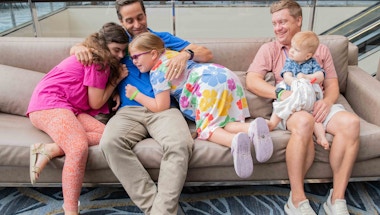
Autism Inpatient Collection (AIC) is a study designed to produce a collection of phenotypic and genetic data from children with a clinical diagnosis of autism who have been admitted to one of six specialized inpatient…
Simons Searchlight
Simons Searchlight is studying individuals with recurrent genetic variants associated with autism and related neurodevelopmental disorders.
Simons Simplex Collection
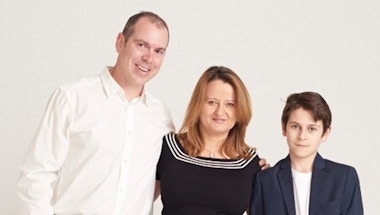
The Simons Simplex Collection (SSC) contains genetic and phenotypic data from nearly 3,000 families with a child affected by autism.
SPARK
SPARK is an online research initiative that aims to recruit 50,000 individuals with autism and their family members living in the U.S.
iPS cell models
SFARI is helping to make iPS cell lines derived from individuals who participated in the SSC and Simons Searchlight available to researchers.
Mouse models
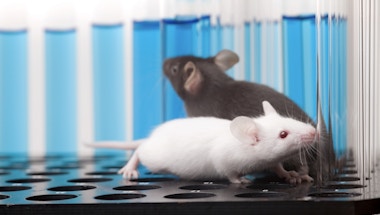
SFARI is helping to make mouse models of high-risk autism genes and copy number variants available to the research community.
Rat models
SFARI is helping to make rat models of high-risk autism genes available to the research community.
Zebrafish models
SFARI is helping to make zebrafish models of high-risk autism genes available to the research community.
Autism BrainNet
Autism BrainNet is a collaborative network of academic sites that collects, stores and distributes brain tissue for autism research.
Data analysis tools
A number of visualization and analysis tools are available to explore genetic and phenotypic data from the SSC, Simons Searchlight and SPARK.
SFARI Base
SFARI Base provides approved researchers with access to data and biospecimens from the SSC, Simons Searchlight, SPARK and Autism Inpatient Collection.
SFARI Gene
SFARI Gene is an evolving database for the autism research community that is centered on genes implicated in autism susceptibility.
Therapeutics
Clinical Research Associates (CRA) is evaluating new potential treatments for autism, including R-baclofen.
Funding Opportunities
We solicit applications for SFARI Awards from individuals who will conduct bold, imaginative, rigorous and relevant research in four main research areas: gene discovery, molecular mechanisms, circuits, cognition and behavior, and clinical.
Since its launch in 2006, SFARI has supported over 550 investigators studying autism-related research in the U.S. and abroad. Research projects include studies at the genetic, molecular, cellular, circuit and behavioral levels, in addition to clinical and translational studies.
Research Highlights

Two studies by different research groups — one led by Flora Vaccarino and the other by Juergen Knoblich — used brain organoids derived from pluripotent stem cells of people with autism and showed how transcriptional alterations affecting certain cell types during human brain development could contribute to the early emergence of ASD.

In a mouse model of fragile X syndrome, Emily Osterweil and her colleagues show that excessive protein synthesis drives a pathological compensatory rise in protein degradation (by the ubiquitin proteasome system), which can be targeted to correct various phenotypes including audiogenic seizures.

A study by Caroline Robertson and her colleagues found that reduced social attention was not a static omnipresent characteristic of autism; rather, it was magnified only under certain real-world conditions where sensory processing demands were high.
Event Videos
View all events →

By clicking to watch this video, you agree to our privacy policy.
Read More
By clicking to watch this video, you agree to our privacy policy.
Read More
By clicking to watch this video, you agree to our privacy policy.
Read More
By clicking to watch this video, you agree to our privacy policy.
Read More